Emmanuel Dan-Awoh Emmanuel Dan-Awoh
  • Home
  • My Portfolio
  • Marketing Tools I’ve Built
    • SEO Compression Ratio Calculator
    • LLM.txt File Generator – Show up in Chatgpt, Grok & Gemini
    • Bulk Meta Description Generator
    • Inlink Opportunity Finder
    • Content Auditor Chrome Extension
  • Udemy Course
  • Blog
    • Articles
  • Services
  • Clients
  • Reviews
  • Resume
Book A Session
Emmanuel Dan-Awoh

Leave your search & conversion rate optimization projects in the hands of a certified Growth & Performance Marketing Manager

  • Home
  • My Portfolio
  • Marketing Tools I’ve Built
    • SEO Compression Ratio Calculator
    • LLM.txt File Generator – Show up in Chatgpt, Grok & Gemini
    • Bulk Meta Description Generator
    • Inlink Opportunity Finder
    • Content Auditor Chrome Extension
  • Udemy Course
  • Blog
    • Articles
  • Services
  • Clients
  • Reviews
  • Resume
find me
AI visibility enhancement
SEO
55

How GEO Drove a 1,276% spike in AI Traffic for Cheer Apparel Seller

AI visibility enhancement

How GEO Drove a 1,276% spike in AI Traffic for Cheer Apparel Seller

A Cheer customization brand was losing organic demand to PPC cannibalizations, zero-click SERPs, and AI overviews.

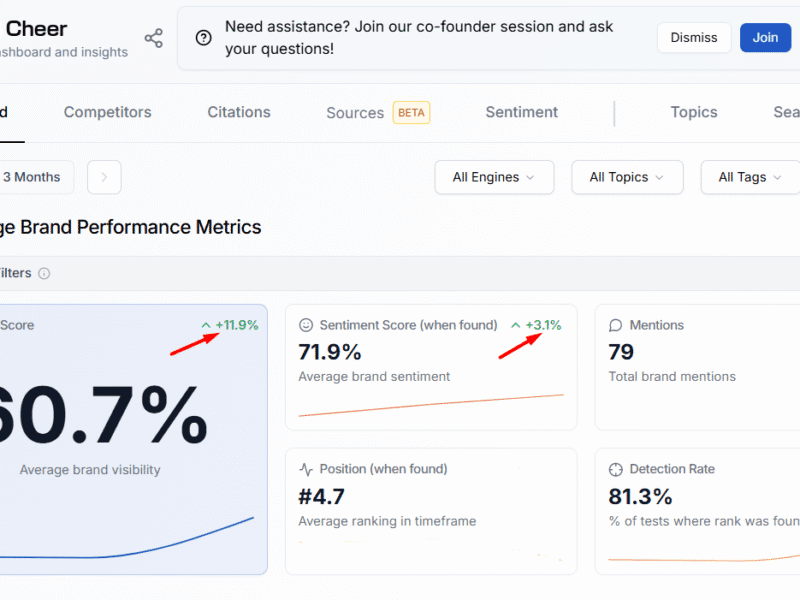
By deploying a technical and semantic GEO strategy, we increased aggregate AI visibility by 11.9% and grew AI-originating users by 1,276% across ChatGPT, Gemini, Perplexity, and Claude.
LIKE THIS 55

Situation

A Cheer apparel customization store was facing growing pressure from AI-induced CTR declines and paid media overcrowding.

  • Product-relevant queries were increasingly cannibalised by PPC, driving rising CPCs alongside a decline in clicks per search.
  • Informational content was losing acquisition value as zero-click SERPs and AI overviews absorbed demand.
  • The brand’s visibility within emerging answer engines and LLM interfaces was limited, reducing discoverability at the moment of intent.

The result was a shrinking organic opportunity space. followed by higher acquisition costs and growing dependency on paid channels.

Task

The objective was to inoculate the Cheer store’s organic traffic against zero-click outcomes and adapt the site for AI-mediated discovery. Specifically, the GEO initiative aimed to:

(a) Diversify search visibility across GUI and API-based LLM surfaces

(b) Improve model recall and prompt relevance

(c) Increase citation frequency within AI responses

(d) Reduce the negative CTR impact of ads and AI overviews

Success was to be measured by AI visibility growth, answer-engine traffic, and response detection rates.

Action

With these AI visibility objectives in mind, we then took the following steps

(i) We created clear AI-friendly accessibility directives in the robots.txt file. This helped prevent any incidental restriction of the site’s content to both AI agents and answer engine crawlers

(ii) We created an LLMs.txt file and uploaded it to the site’s root folder. The role of this file was to expose the information architecture of the site to LLM crawlers such that at inference time, they can access information about the site’s pages without having to expend crawl and rendering resources

(iii) We expanded our target keywords into the search queries and prompts they are most likely to be embedded in. This was then used to create

  • New subheadings and paragraphs in existing blog posts
  • FAQ copy on collection and product pages

(iv) We also extended the schema footprint of the website by embedding.

  • Carousel and collection page schema on category pages
  • Web page schema on product pages
  • Keyword properties in organisation, product, and article schema snippets

(v) We added the Shopify knowledge base app and provided answers to agent-derived questions about the business and its products

(vi) We added lastmod attributes to the XML sitemap to amplify recency signals associated with the site’s content, thus improving mentions and citation frequency in AI responses

Result

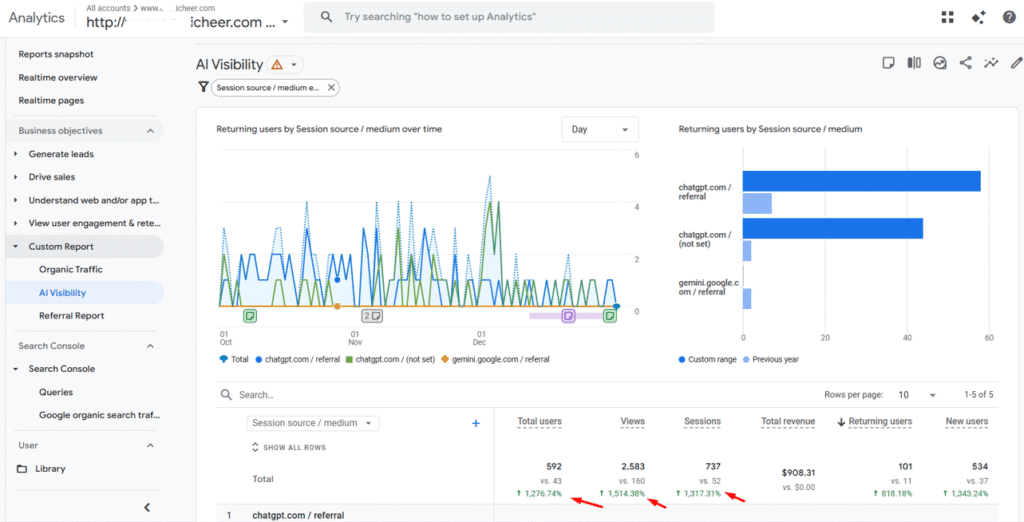
Cheer AI visibility in GA4

The GEO initiative delivered decisive, measurable gains across AI discovery and engagement metrics:

(1) +11.9% increase in aggregate AI visibility (Rankscale)

(2) +26.1% uplift in AI response detection rates

(3) In GA4, users arriving from Gemini, ChatGPT, Perplexity, and Claude grew by 1,276.74%, increasing from 43 users in Q4 2024 to 592 in Q4 2025.

Collectively, these gains validated the strategy’s effectiveness in offsetting zero-click erosion, reducing reliance on paid acquisition, and positioning Omni Cheer for sustained growth in AI-first search

PPC | SEO
16

Resolving Google Merchant Center Misrepresentation After a Security Breach

Resolving Google Merchant Center Misrepresentation After a Security Breach

LIKE THIS 16

Situation

An EU-based e-commerce store was on a steady growth trajectory in both traffic and revenue when a server migration unintentionally introduced security vulnerabilities. An outdated plugin was exploited, allowing unauthorized access that resulted in widespread on-site manipulation.

The breach caused:

  • Tampering with Open Graph tags and Search Console branding
  • Unauthorized modifications to robots.txt, leading to the indexation of dynamic and spam URLs
  • Overwritten product descriptions, images, and metadata
  • Injection of fake review snippets and altered product schema properties

Because Google Merchant Center was pulling data from a “found by Google” feed, these changes propagated into Shopping listings. Products began appearing with misleading reviews, incorrect descriptions, and mismatched images—triggering a Google Merchant Center misrepresentation violation.

The account was subsequently suspended, products were delisted from Shopping surfaces, and revenue dropped immediately.

Task

My objective was to:

  • Eliminate the root cause of the misrepresentation
  • Restore content, schema, and feed accuracy
  • Remove all injected and spam content from Google’s index
  • Regain Google Merchant Center eligibility through a successful policy appeal

Action

I implemented a remediation strategy focused on security hardening, index cleanup, and misrepresentation resolution:

  1. Containment of Misrepresentation Sources
    • Disabled all Merchant Center feeds and data sources to prevent further dissemination of corrupted product data
    • Deployed MalCare to scan for malware, identify vulnerabilities, and remove infected files
  2. Index & Crawl Remediation
    • Initiated bulk removal of spam URLs in Google Search Console
    • Enforced 410 status codes on all breach-generated URLs to permanently deindex them
    • Rebuilt the robots.txt file to restrict crawl access to invalid and spam URL patterns
    • Resubmitted a clean XML sitemap to re-establish canonical crawl paths
  3. Accelerated Re-evaluation
    • Used the Google Indexing API to expedite recrawling of eligible pages
    • Purged cached spam content, fake SKUs, manipulated reviews, and corrupted schema
    • Monitored indexation until a sharp decline in invalid indexed pages confirmed misrepresentation cleanup
  4. Merchant Center Reinstatement
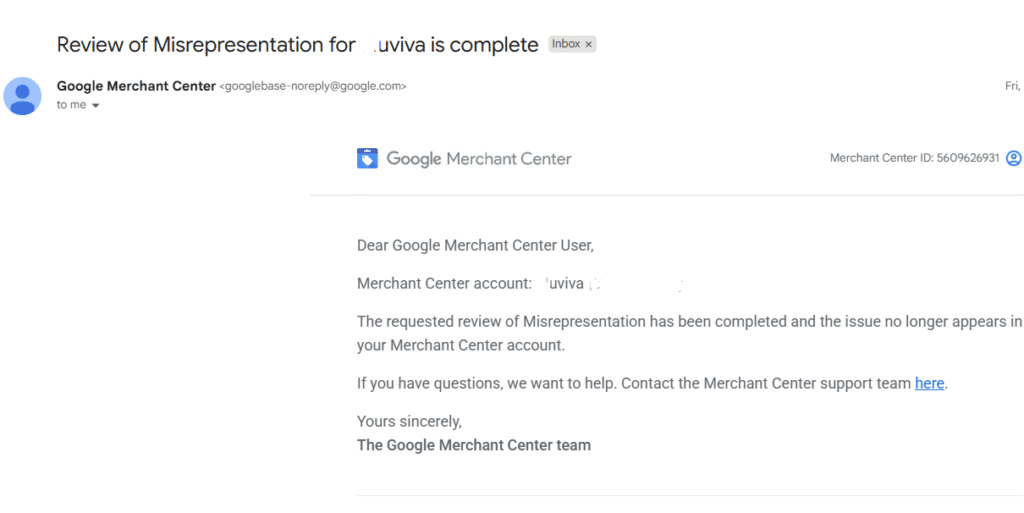
    • Submitted a detailed appeal documenting the breach, corrective actions, and preventative safeguards implemented to avoid future misrepresentation issues
How a security breach triggered a Google Merchant Center misrepresentation suspension, and the exact technical, index, and feed remediation steps used to regain approval, restore listings, and recover lost revenue.

Result

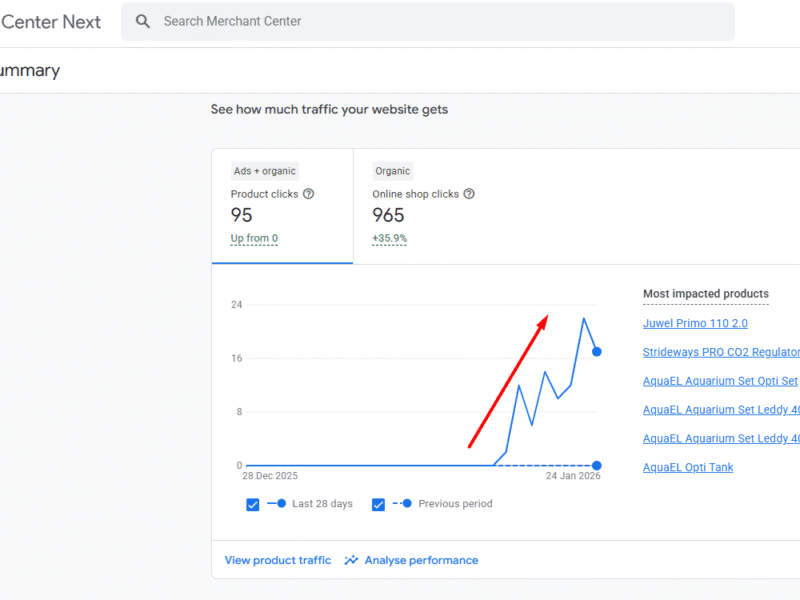
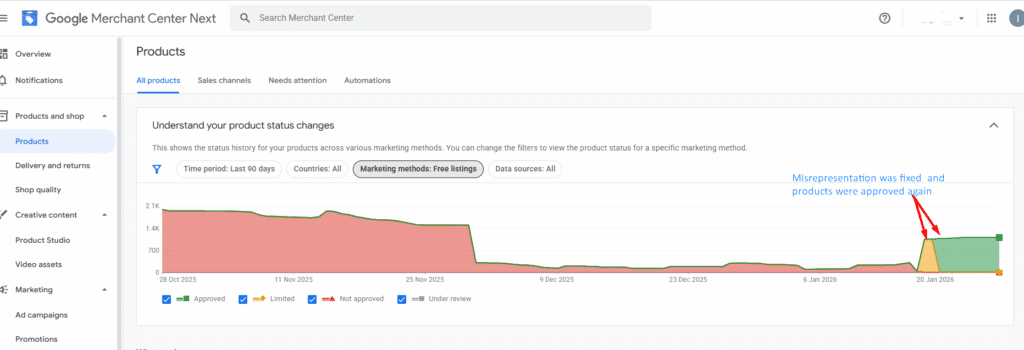
Google approved the misrepresentation appeal, fully reinstating the Merchant Center account

  • All affected products were relisted across Shopping surfaces
  • Spammy reviews, injected schema, and misleading product data were fully removed
  • Traffic and revenue rebounded, returning the store to a sustained growth path
SEO
113

Drove 878% Revenue Surge For EU Aquarium Store via Google Shopping SEO

Drove 878% Revenue Surge For EU Aquarium Store via Google Shopping SEO

An EU aquarium supply store faced cookie blocks, feed errors & product disapprovals. See how strategic technical SEO & feed optimization unlocked an 878% rise in item revenue and massive growth.

LIKE THIS 113

Situation

A leading online retailer of aquarium supplies, serving customers across the European Union, was navigating a complex digital landscape fraught with technical barriers.

Despite a vast inventory, their international growth was stymied by a series of critical optimisation bottlenecks. A plugin conflict was blocking e-commerce cookies, rendering crucial revenue data in GA4 invisible and leaving the business in the dark about product performance and customer behaviour.

Furthermore, its international structure, with numerous language subfolders (e.g., /fr/, /es/, /it/), created a cascade of issues. Product feeds were flagged for currency mismatches in shipping costs, leading to violations in key markets like the UK, France, and Finland. Simultaneously, a significant portion of these international product and collection pages were being crawled but not indexed, remaining hidden from potential customers.

To compound these issues, essential products like testing kits and fish medicines were frequently disapproved in advertising platforms for “misleading claims,” stifling top-of-funnel growth.

Actions & SEO Interventions

In response, a multi-faceted technical SEO and feed management strategy was deployed.

(1) The first intervention reconfigured the consent management in Google Tag Manager, implementing preloaded consent signals to accurately capture transaction data from the page. This immediately activated comprehensive revenue reporting in GA4, providing the client with their first clear insights into product metrics and audience value.

(2) To tackle the indexation deficit, a custom Python script was developed to automate bulk indexation requests via the Google and Bing Indexing APIs, rapidly increasing the number of products visible in search results and expanding the site’s keyword capture potential.

(3) For the product feeds, we activated the “found by Google” feature in Merchant Center, allowing Google to auto-populate the site’s inventory directly from the website, which accelerated indexation and improved Google’s understanding of the site’s product focus across all languages.

Resolutions

The most impactful fix addressed the currency mismatch violations head-on.

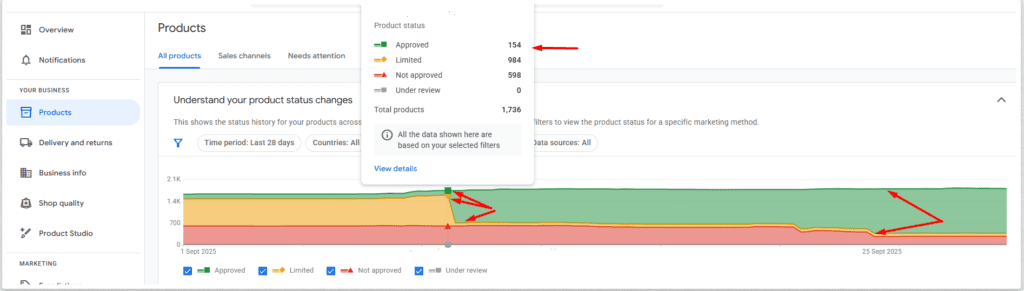
(a) We optimised the product feeds by implementing an on-page currency switcher for customers while standardising the shipping policy definitions to a single currency both on-page and in Merchant Center. This simple yet crucial correction resolved the feed errors and resulted in an astounding 827% spike in product approvals across all affected countries.

(b) Additionally, product titles were enriched with high-intent keywords through supplemental feeds to better align with user search queries.

(c) To cement these technical gains, a targeted backlink campaign built connections with EU-specific business directories and comparison shopping services, strengthening the site’s Domain Authority and entity recognition within Google’s knowledge graph.

Results & Impact Recorded

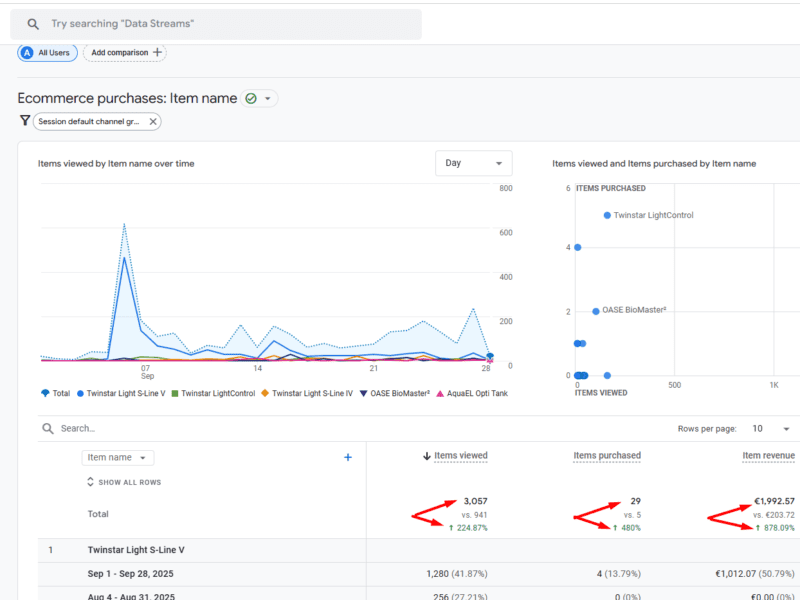
The culmination of these strategic interventions was a dramatic transformation in performance. The store witnessed a 224.87% uplift in items viewed, a 480% expansion in items purchased, and an 878.09% increase in item revenue.

CRO | Product Marketing
308

Driving +39% Organic Revenue Growth: How CRO + SEO Reversed Declines For F1 Motorsports’ Dealer

Driving +39% Organic Revenue Growth: How CRO + SEO Reversed Declines For F1 Motorsports’ Dealer

In just one quarter, we turned a -22% revenue decline into a +39% uplift for this F1 Motorsports dealer.

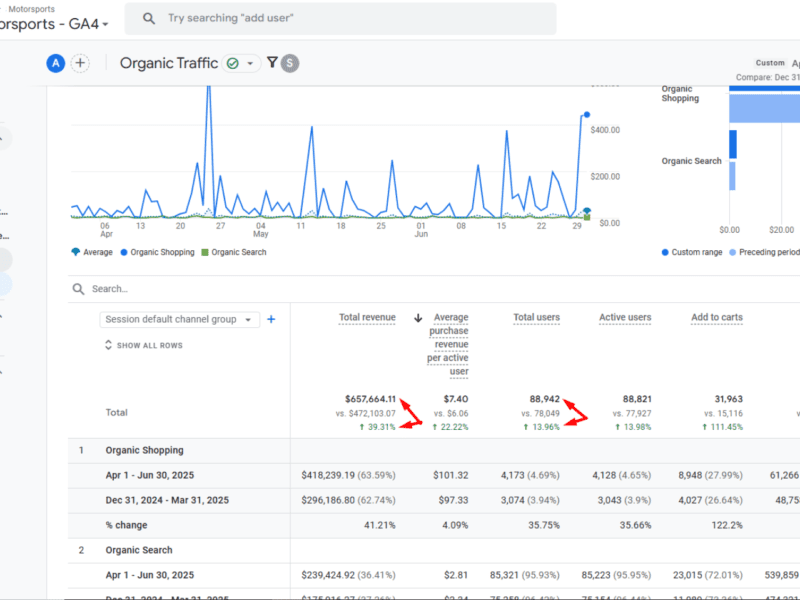
By combining CRO enhancements with SEO fixes, Q2 organic revenue rose to $657K.

At the same time, revenue per user jumped by +22% and organic clicks rose by+12%.

This rebound not only offset the seasonal dip tied to the F1 racing calendar but also proved that protecting branded traffic and reducing checkout friction can drive lasting, scalable growth.

LIKE THIS 308
VIEW PROJECT

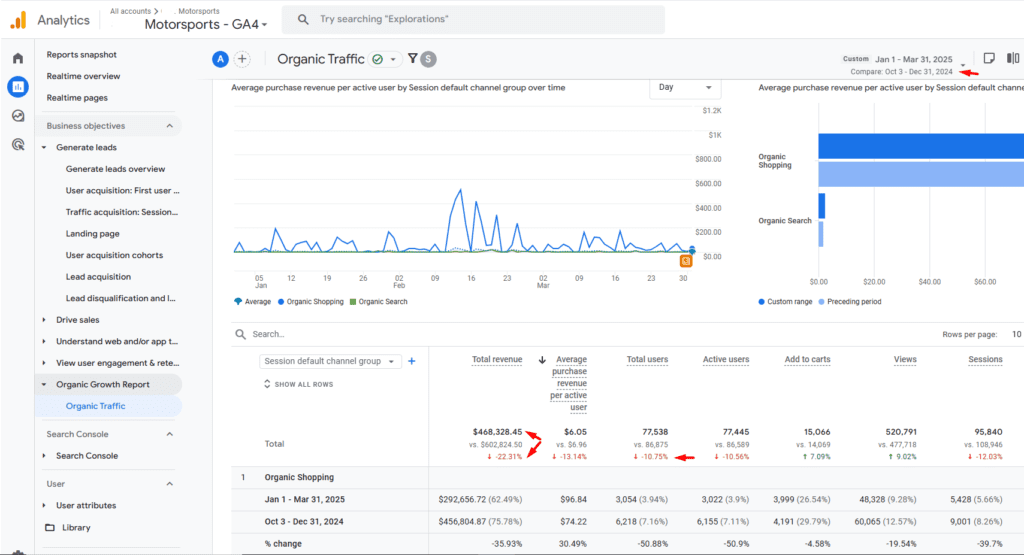
A niche e-commerce brand specializing in Formula 1 merchandise experienced a significant decline in traffic (-10.55%) and revenue (-22.31%) from Q4 2024 to Q1 2025.

This wasn’t entirely surprising — racing events don’t fall evenly across the calendar year, which creates natural fluctuations in demand. But year-over-year comparisons showed deeper challenges:

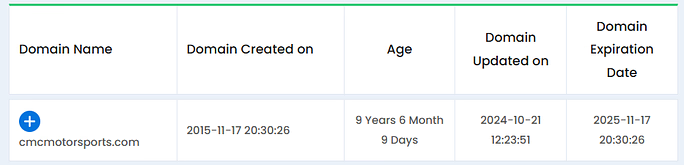
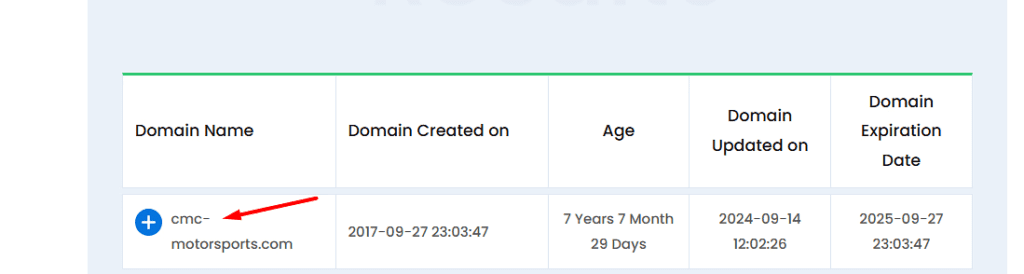
(1) Brand cannibalization was spiking due to the activities of a domain squatting site (cmc-motorsports.com). This site started ranking for branded keywords, hence precipitating declines in domain and branded search traffic.

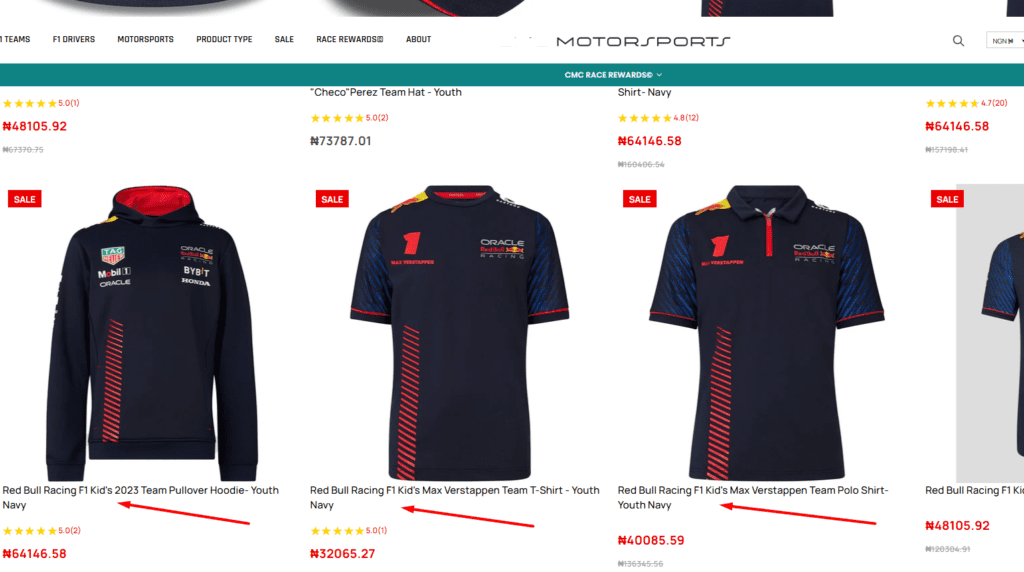
(2) Sharp keyword + organic click losses for products associated with high search volume brands like Red Bull and McLaren.

(3) Product page 404s that eroded revenue from in-demand but no-longer-available products. These 404s also caused site structure dislocations, disrupted inlink equity distribution, and reduced keyword reference counts on the host collection pages.

The business needed a strategy that could both stabilize performance during low-demand periods and capture maximum upside during peak racing months.

Tasks

Our mission was twofold:

  • Reverse the decline in organic traffic, protect branded search, and improve keyword relevancy.
  • Increase conversion rates by reducing friction in checkout, enhancing the complementarity of upsell and cross-sell recommendations, improving recurring purchase frequency, and highlighting customer incentives.

We also needed to stabilize performance against external risks like F1’s seasonal search demand (which coincided with the racing calendar)and branded traffic cannibalization from domain squatters.

Action

To address these challenges, we rolled out a combined CRO + SEO strategy:

On the SEO front, these were the Actions Taken

(a) Filed Infringement Complaints To Overcome IDN Homograph attacks and the Domain Squatting effort of some competitors: This was achieved by initiating steps against the infringing competitor domain through ICANN’s UDRP process.

(b) On-Page Optimization: Wrapped product titles in collection grids with heading tags (H3/H4) to reinforce and amplify relevancy signals.

(c) Schema Implementation: Added WebPage and Carousel schema to expand SERP visibility, SERP coverage, and CTR.

(d) 404 Management: Shifted strategy from product-page 404s to “out of stock” labels. This helped to keep in-demand products available, thus absorbing traffic that would have been lost to their 404 status. We also implemented a sell-on-backorder feature, which allowed us to extract revenue that would have ordinarily been lost to zero stock items and their ensuing 404 status.

To improve the average revenue per site visitor, we undertook some CRO interventions, including

(e) Product Page Injection of Google Pay Button: Integrated credit card display on product pages to trigger “pre-filled convenience” and trust effects.

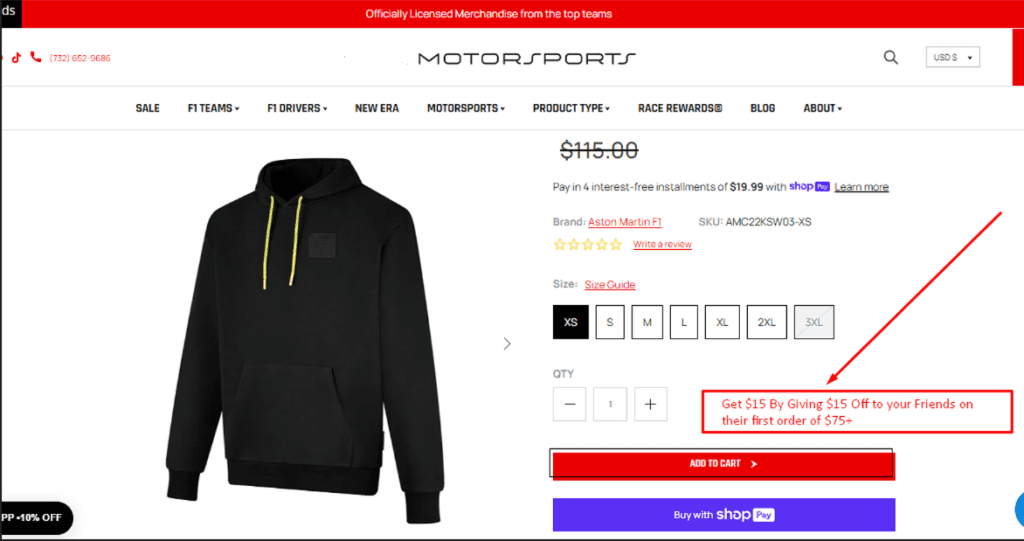
(f) Referral Program Integration: Moved “Give $15, Get $15” referral offer from the rewards page onto product and cart pages. This allowed us to create a traffic acquisition loop that funneled in-market and purchase-ready users to the site, independent of Organic or PPC touch points

(g) Purchase Habituation Via Reward Point-Product Price Associations

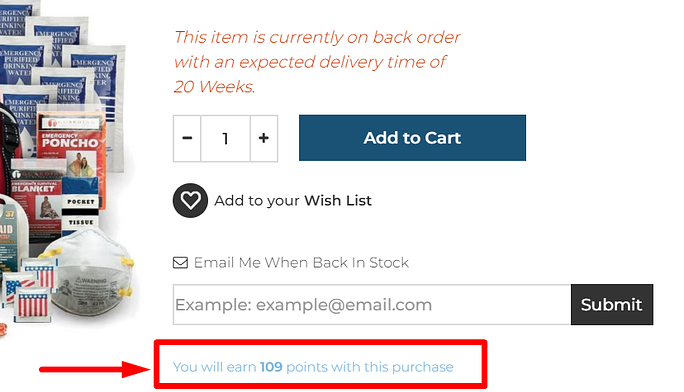
By adding “100 points = $1” on all product pages, we were able to amplify the perceived value associated with every purchase. These reward points were also an “investment” which guaranteed repeat visits to the site (as detailed in the Hooked Model). By offering reward point information side by side with products, we were able to increase the dopamine hits associated with purchases, while using investments (in the form of accumulated points) to create a reliable revisit and repurchase cycle that helped stabilize traffic and revenue

Result

The results between Q2 2025 and Q1 2025 marked a clear turnaround:

Organic Revenue: Increased 39.31%, climbing from $472,103.07 to $657,664.11.

Revenue per Organic User: Rose 22.22%, from $6.06 to $7.40.

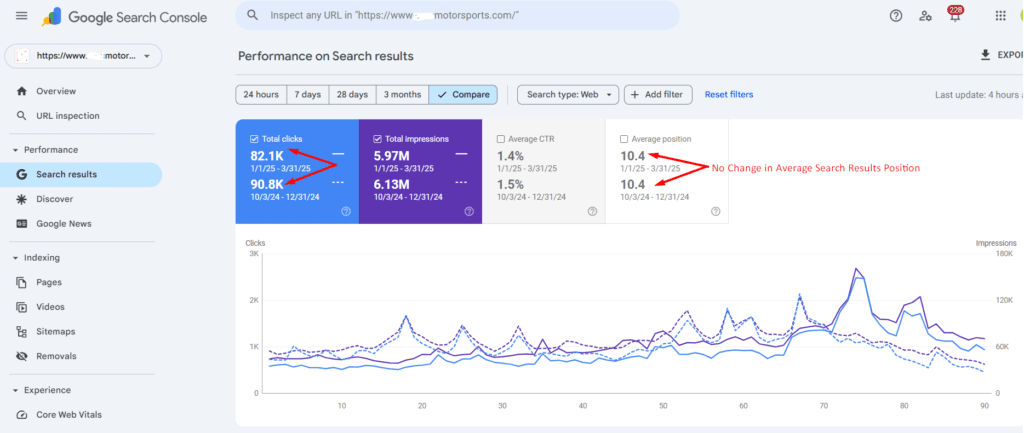
Organic Clicks: Grew 12.48%, from 82.5K to 92.8K in Google Search Console.

SEO
156

From 3.3K to 7.48K Clicks In 120 days: 4 SEO Fixes That Transformed a Custom Planter Business

From 3.3K to 7.48K Clicks In 120 days: 4 SEO Fixes That Transformed a Custom Planter Business

A custom planter and window box retailer faced severe Merchant Center disapprovals along with traffic and revenue drops across google shopping surfaces (both free and paid).
Through targeted technical SEO and LLM optimization—including structured data fixes, render budget optimization, keyword expansion, and crawl path enhancements—we restored Shopping eligibility, doubled organic clicks, and drove a 137% revenue increase in just four months.

LIKE THIS 156
VIEW PROJECT

Client Overview


A high-AOV ecommerce retailer specializing in window boxes and outdoor planting systems relied heavily on seasonal demand peaks in summer, with steep declines in winter. To stabilize revenue, the business pivoted toward high-value custom planter and window box solutions for architects, interior decorators, and property managers.

However, a critical mismatch in product availability between Google Merchant Center feed data, product page content, and schema markup led to large-scale disapprovals. This meant the majority of the store’s products were absent from free listings and Shopping Ads across Google, Bing, DuckDuckGo, and Qwant — severely limiting visibility.


Situation


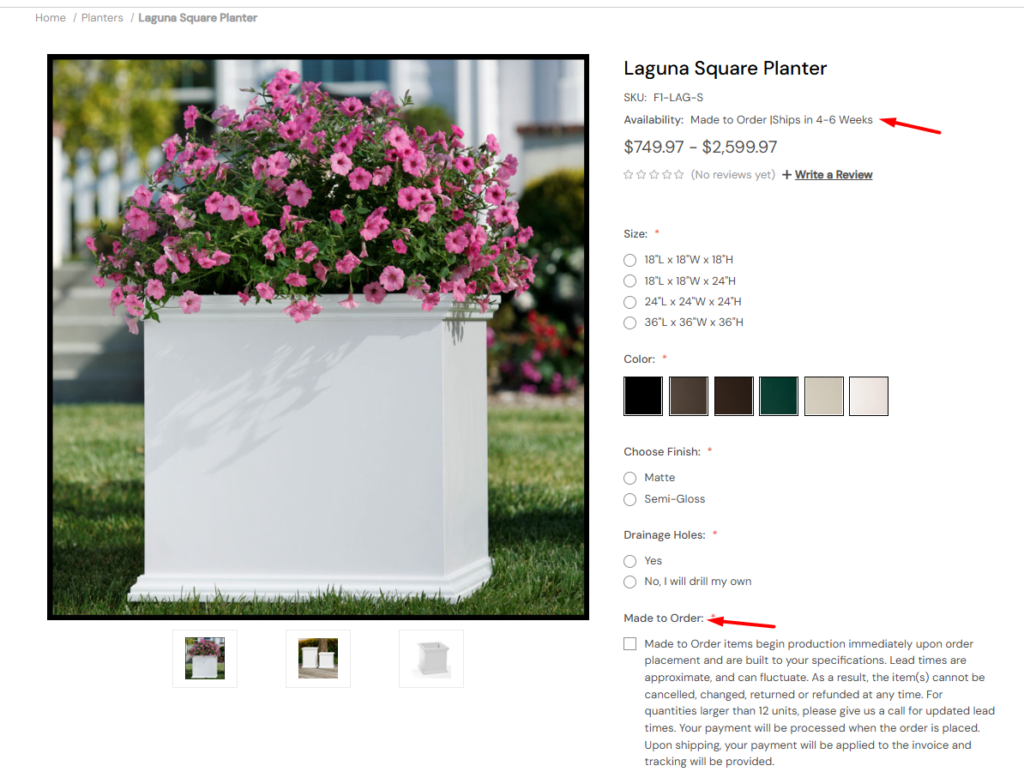
Despite a strong product offering, the site could not appear on Shopping surfaces for its custom planters because of conflicting availability statuses:

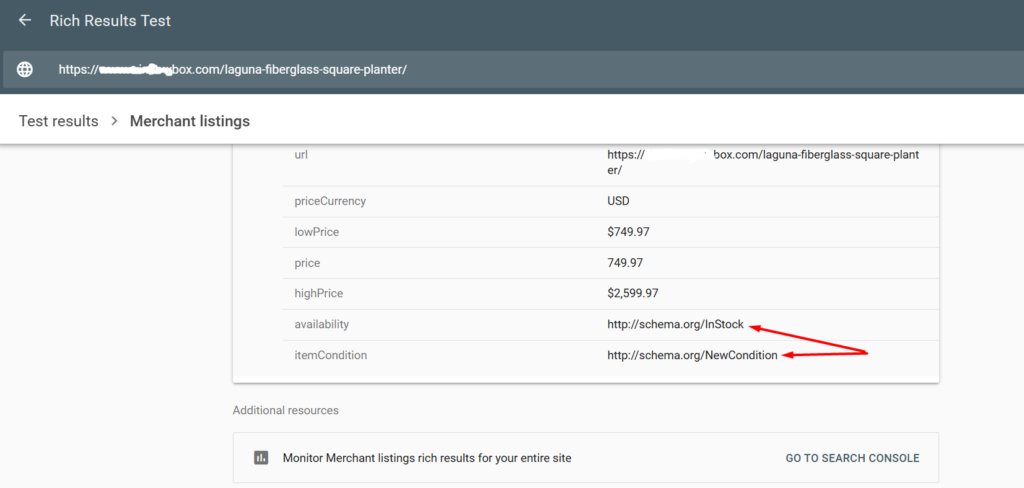
  • Feed level: “In stock”
  • Product page: “Made to order”
  • Schema: “In stock”

This inconsistency triggered disapprovals in the Merchant Center for most products. Compounding the problem, the site’s keyword portfolio leaned heavily on weather-dependent terms, leaving it vulnerable to seasonal demand drops.


Task:


I was tasked with:

  1. Resolving the product availability mismatch to restore Merchant Center eligibility for custom products.
  2. Expanding keyword coverage to include stable, year-round search terms.
  3. Leveraging technical and Generative engine optimization to capture more visibility across general search, map packs, and geo-intent queries — compensating for seasonal Shopping tab volatility.

Action

I executed a comprehensive technical and local SEO strategy, including:

  1. Keyword & Page Type Expansion:
    • Created Industry and Use Case pages targeting stable B2B queries (e.g., “planters for commercial buildings”).
    • Applied keyword-rich naming conventions to existing collection pages.
  2. On-Page SEO Enhancements:
    • Encased all product names in heading tags, especially for collection page listings.
    • Bolded key commercial and informational keywords sitewide to strengthen relevance signals.
  3. Technical SEO & Crawl Optimization:
    • Reduced raw vs. rendered HTML discrepancies to improve render ratio and crawl efficacy.
    • Created llms.txt to enable generative engines to reference site content during inference without full-page rendering.
    • Modified robots.txt to improve accessibility for LLM crawlers and inclusion in training datasets.
    • Reduced site “diameter” — the maximum click depth between indexable pages — to strengthen internal link equity.
  4. Off-Site Barnacle SEO:
    • Established branded product listings and backlinks via Pinterest, Reddit, Listium, and Quora to gain additional SERP real estate.
  5. Merchant Center & Schema Fix:
    • Updated structured data to reflect “preorder” status for custom products, aligning with product page messaging and feed data.
    • Eliminated the availability mismatch, restoring Merchant Center eligibility.

Result


Within four months (Jan–Apr 2025 vs. Aug–Dec 2024):

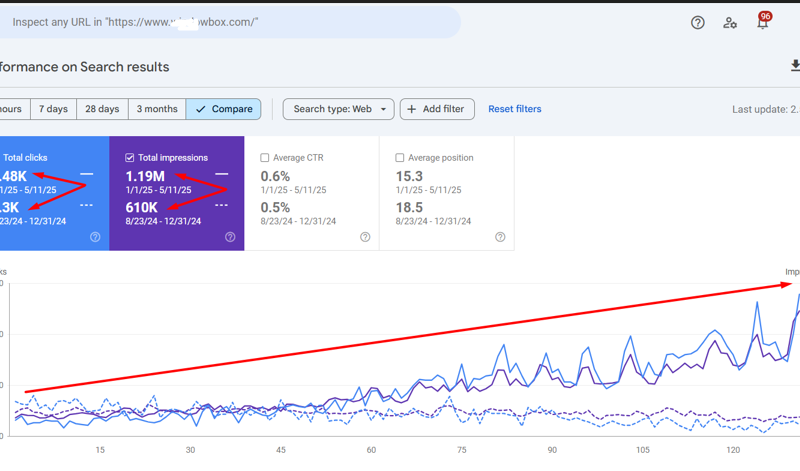
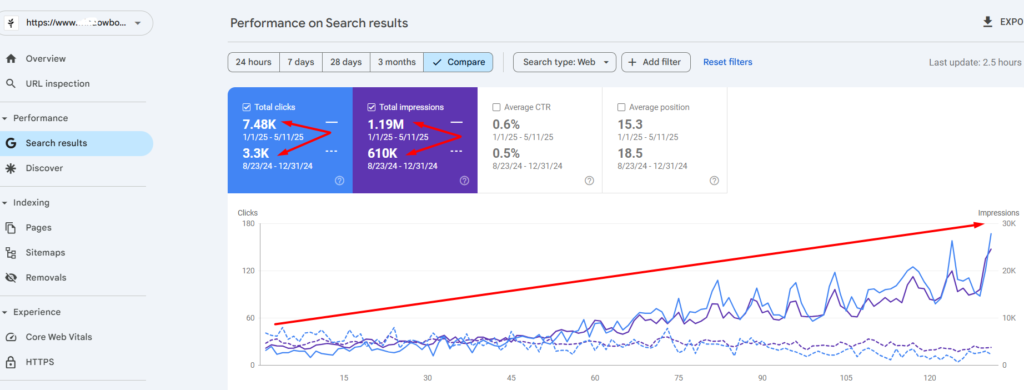
  • Organic Clicks: Increased from 3.3K to 7.48K (+126%).
  • Organic Impressions: Increased from 610K to 1.19M (+95%).
  • Merchant Center Recovery: The Majority of custom products reinstated for free listings and Shopping Ads, driving a measurable spike in Shopping impressions and clicks.
  • Keyword Stability: New B2B and local-intent keyword rankings reduced reliance on seasonal search trends.

Revenue Impact

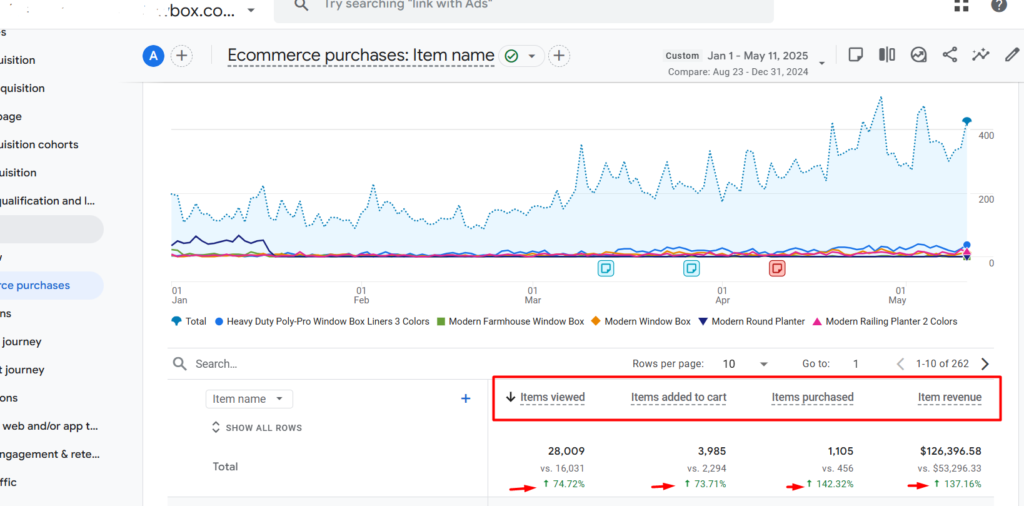
  • Items Viewed Grew By +74.72% (28,009 vs. 16,031)
  • Items Added to Cart Rose By +73.71% (3,985 vs. 2,294)
  • Items Purchased Inclined By +142.32% (1,105 vs. 456)
  • Item Revenue Improved By +137.16% ($126,396.58 vs. $53,296.33)
CRO
184

Drove 240% Revenue Growth to $1.4M with a Simple CRO Tweak: Free Resizing Case Study

Drove 240% Revenue Growth to $1.4M with a Simple CRO Tweak: Free Resizing Case Study

Discover how I transformed overlooked policy messaging into a powerful sales driver.

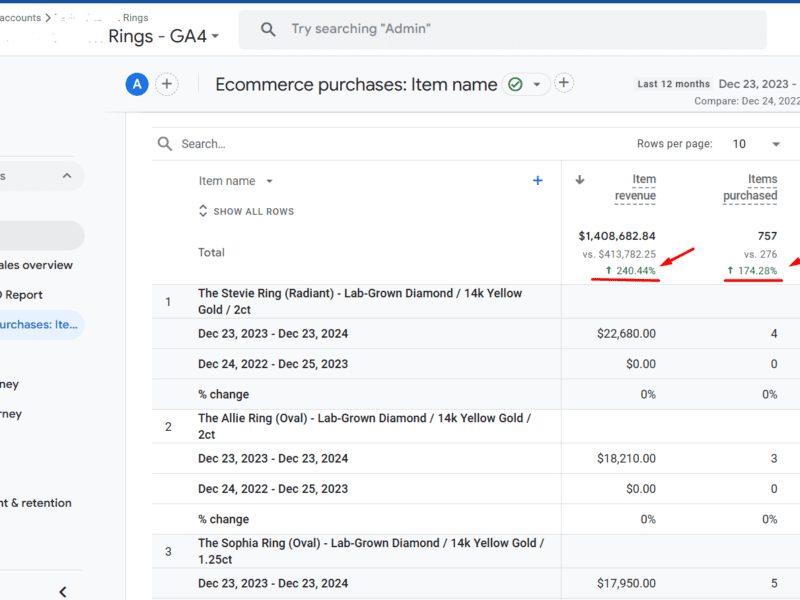
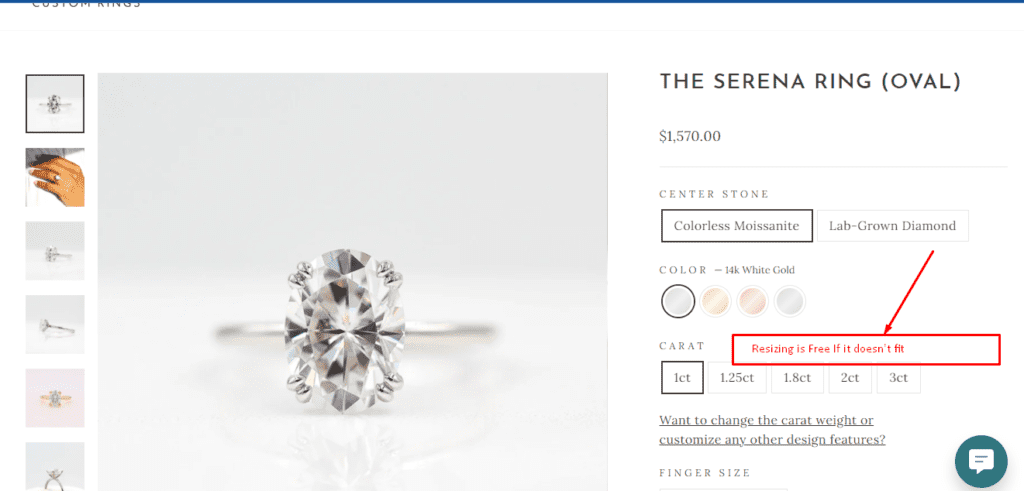
By repositioning the free ring resizing policy above the fold, we reduced customer hesitation, increasing the number of purchases by 174%

Leveraging qualitative insights from heatmaps and click maps, this strategic update directly addressed customer concerns, turning a passive feature into a compelling value proposition

LIKE THIS 184

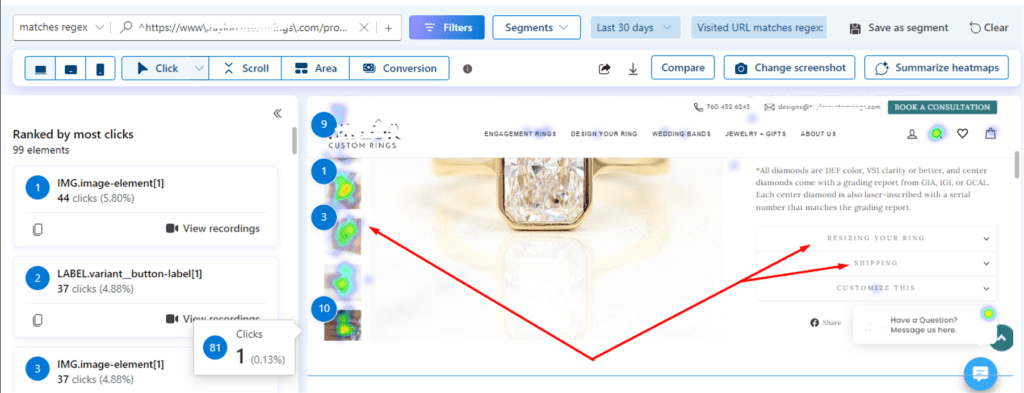
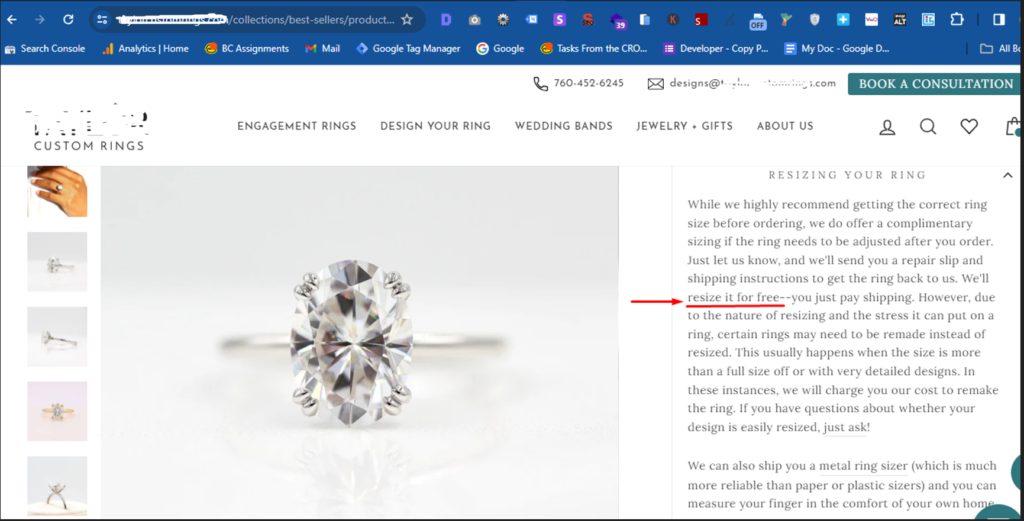
Clarity heat maps revealed that critical product page dropdowns, including the free ring resizing policy, were largely ignored by visitors. The click map showed minimal activity around these dropdowns, indicating a lack of engagement with the information.

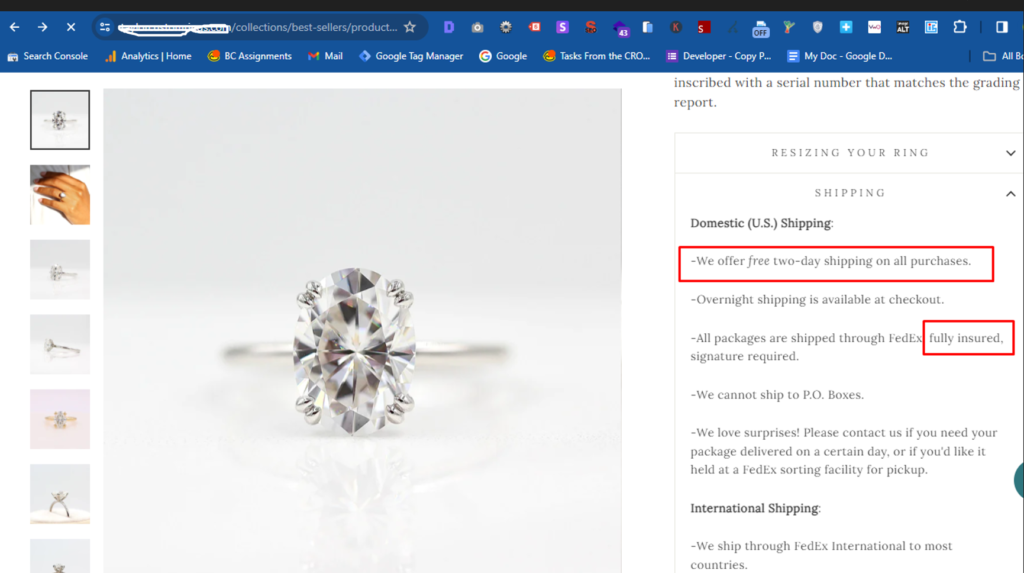
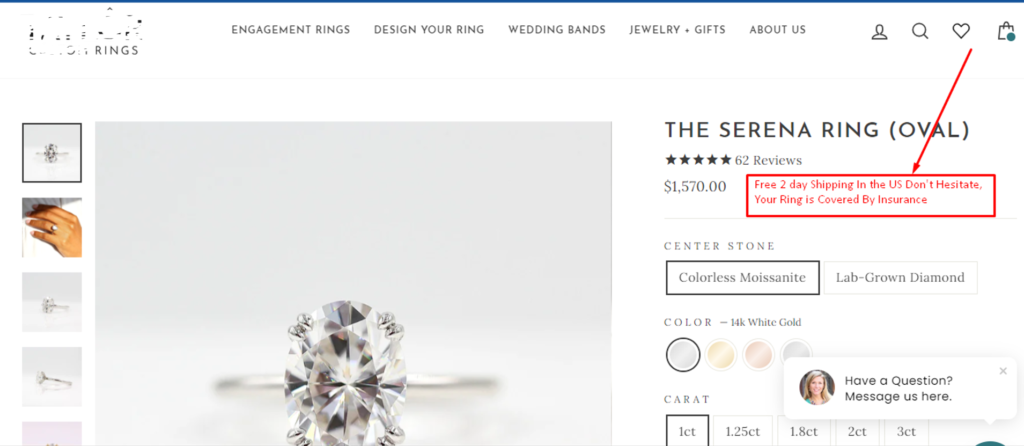
Similar to the resizing policy, the free shipping and ring insurance policies were also buried in dropdowns on product pages, as evidenced by clarity heatmaps and empty click maps. Given the price points of these jewelry products, these unnoticed policies were going to be critical for reassuring customers. Despite their importance, they were not being noticed by product page visitors

Since the information wasn’t getting seen, its sales-enhancing effect was also not influencing the purchase decisions of product page visitors.

Our hypothesis was that if this information was more visible, it would increase the sales performance of ready to ship products (a suit of products that did not require gem stone or ring sizing customizations)

Here is what the resizing, shipping and insurance policy stated across all product pages

Reasoning: For wedding and engagement rings, the worst thing that can happen is for the item to not fit the finger of the recipient. Most times the person making the purchase is not the one who is going to use the ring.

This means that apart from price, size uncertainty is a significant consideration that could be contributing to the time to purchase.

Task

In the resulting experiment, we aimed to embed this info above the fold so that it could get seen at the time when products are being considered
To address this, we aimed to make the risk-reversal messaging and policy more visible by embedding the information above the fold on product pages.

This adjustment sought to mitigate insurance, shipping and size-related uncertainty for wedding and engagement rings, a common barrier to purchase due to fear of misfitting.

Actions

The free resizing, shipping and ring insurance policies were prominently displayed above the fold across all product pages. The message was crafted to directly address customer concerns, emphasizing that resizing was free, shipping was free and that the costly rings were insured


The adjustment was implemented while ensuring that the design remained consistent with the overall product page layout.

Result


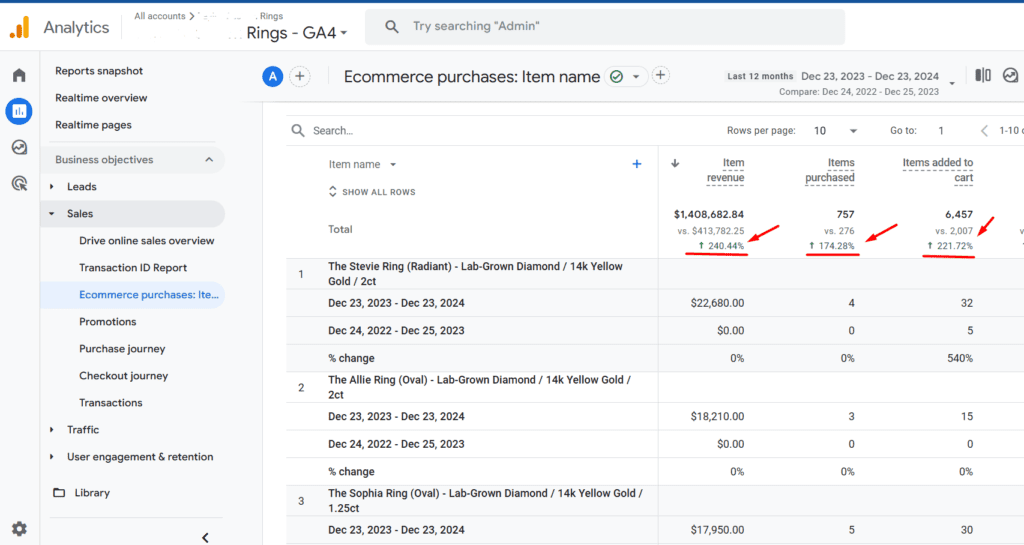
Over the past 12 months, these experiments have demonstrated a measurable impact in keeping revenue, purchases and product-to-cart-page progression on a steady incline

  • Product purchases increased by 174.28%, as users engaged more with the visible resizing policy message.
  • Product-to-Cart Page progression improved by 221.72%
  • Revenue on ready-to-ship jewelry products improved by 240%, validating the hypothesis that making the resizing policy prominent would positively influence buyer decisions.
See More